PRP vs. Mesotherapy: Which Is Right for Your Hair Loss Stage?
It is the question we field more than any other at the consultation table: PRP or mesotherapy? The framing is understandable — most clinics list them as separate line items — but it sets up a choice that does not really exist. The two treatments do different jobs. Understanding what each one is actually for is what allows a plan to be built around your stage of hair loss rather than around a menu.
Two treatments, two different jobs
PRP works with your own biology
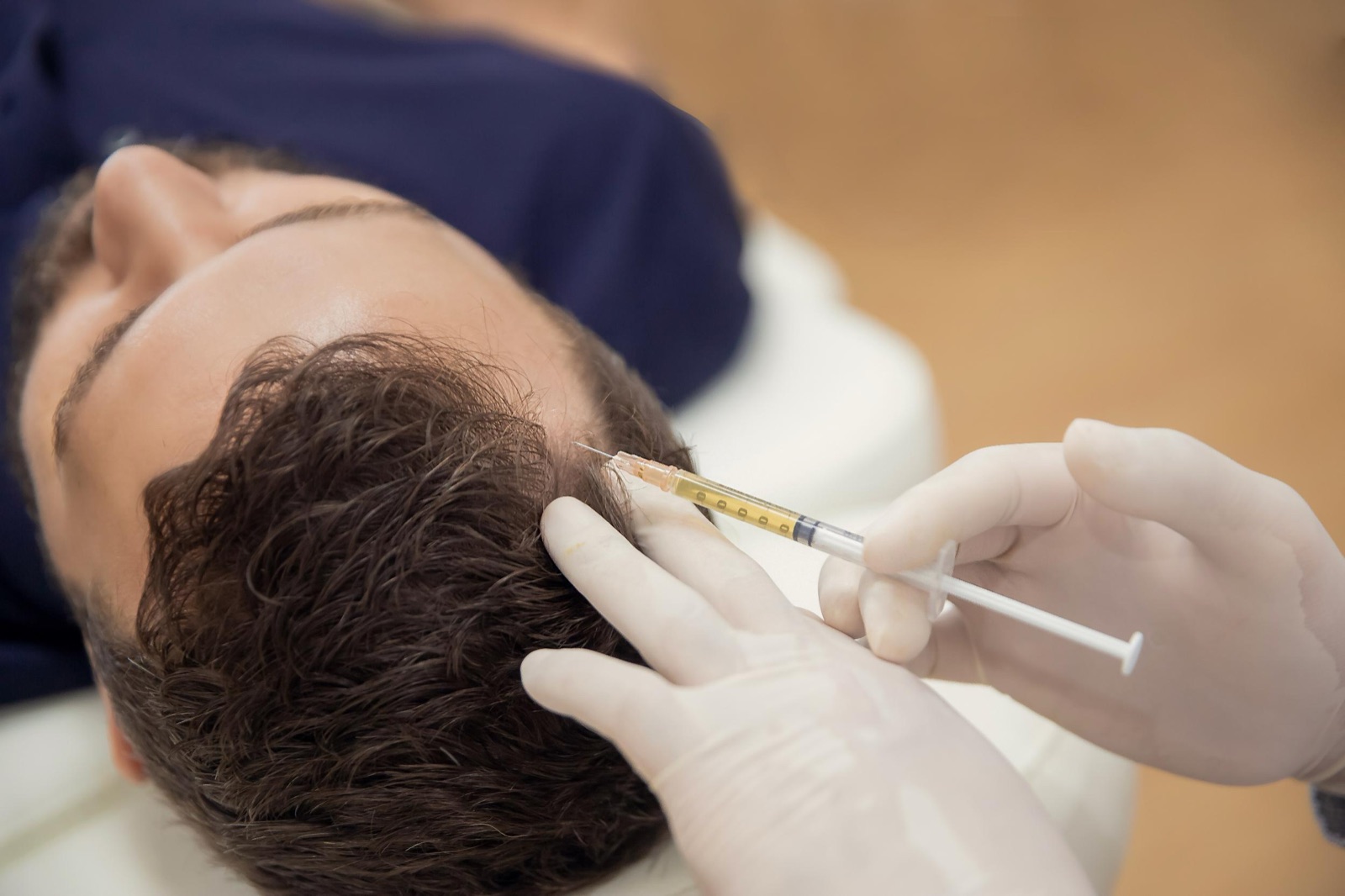
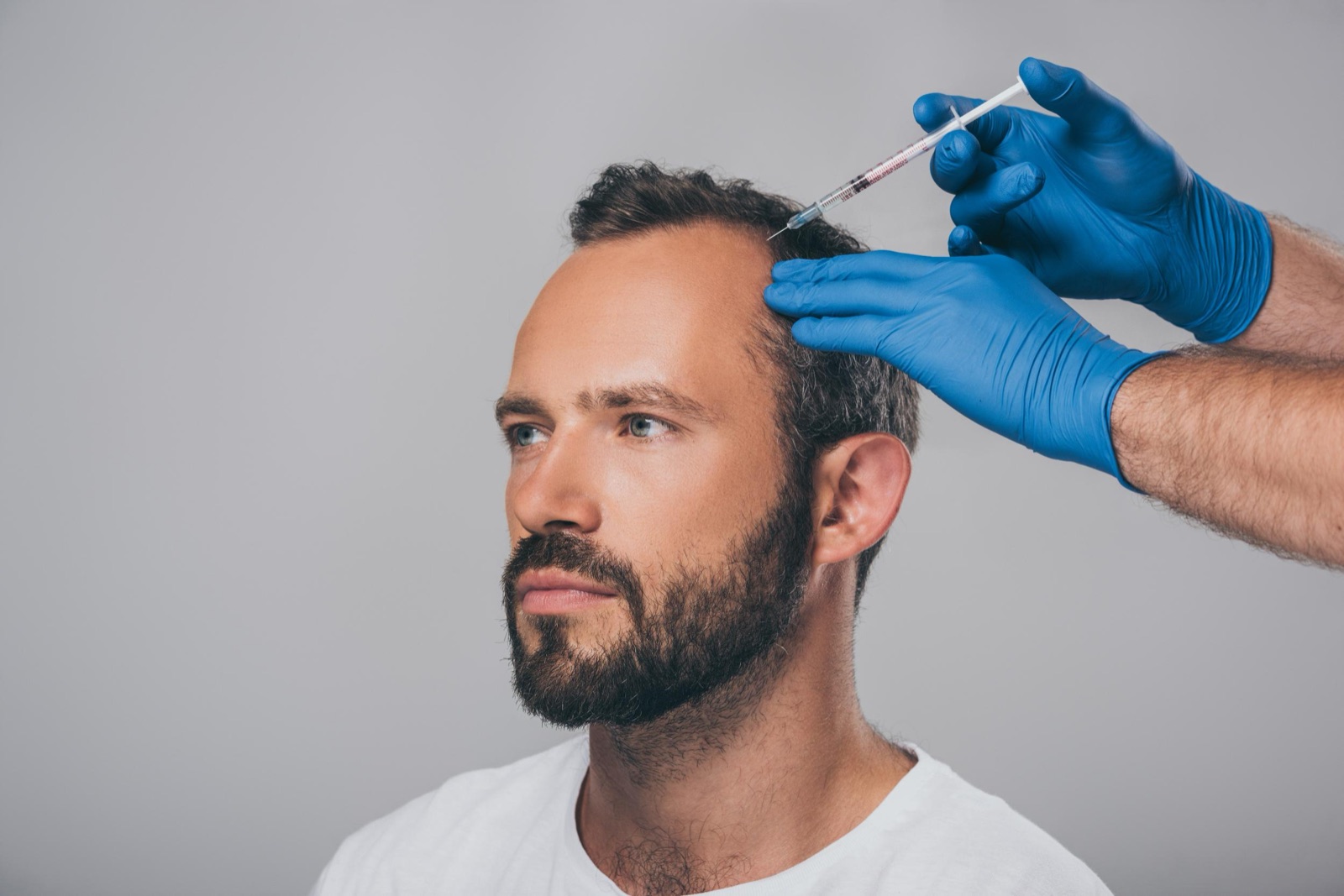
Platelet-rich plasma begins with a small blood draw. The sample is spun in a centrifuge to separate and concentrate the platelet fraction, and that concentrate is returned to the scalp as a series of shallow micro-injections placed across the areas of thinning.
Platelets are the body’s repair signal. Concentrating them and placing them directly around the follicle is designed to support the follicular unit during the phase when it is shrinking but has not yet been lost. Nothing foreign is introduced — the material is entirely your own. You can read the full protocol on our PRP Hair Restoration page.
Mesotherapy conditions the environment
Mesotherapy takes the opposite approach. Rather than concentrating something from you, it delivers something to you: a compounded formula of vitamins, amino acids, trace minerals and peptides, placed into the dermal layer of the scalp as a grid of very fine microinjections.
The logic is delivery. A follicle sits several millimetres below the surface, and topical products have to negotiate the skin barrier to reach it. Microinjections bypass that barrier entirely and distribute small volumes exactly where the follicle lives. Details are on our Mesotherapy Vitamins page.
Matching the treatment to the stage
Early thinning, no visible scalp
If the change you are noticing is textural — hair that feels finer, a ponytail that has lost weight, a part that photographs slightly wider — the follicles are almost certainly all still present and cycling. This is the stage where mesotherapy earns its place, and where a combined course tends to be recommended rather than PRP alone. The objective here is maintenance and density support, not recovery.
Visible thinning and established miniaturization
Once scalp is visible through the hair under normal light — a widening part, a receding temporal angle, a crown that shows in photographs — miniaturization is underway. Follicles are producing progressively finer, shorter, less pigmented hairs with each cycle.
This is the stage PRP is built for, and it is the stage where we most often recommend running both treatments together. PRP addresses the follicle itself; mesotherapy addresses the environment around it. Neither treatment can promise regrowth, and results vary by individual — but the combination gives a plan two levers rather than one.
Long-standing, smooth loss
Where an area has been completely smooth for years, the follicular unit may no longer be viable, and no injectable protocol can rebuild what is no longer there. We will tell you this at the consultation. In those cases the honest conversation is about protecting the density you still have around the perimeter, and about surgical options that sit outside our scope.
Why PRP + Mesotherapy is our lead recommendation
Across the 2,100+ patients we have treated since 2019, the combined protocol is the plan we build most often. The reasoning is straightforward:
- They are not redundant. Concentrated platelets and a nutrient formula are doing different things at the same site.
- They share a schedule. Both are delivered in the same appointment window, so a combined course does not double your time commitment.
- It is easier to hold a course. Hair responds on the timeline of the hair cycle, not the treatment calendar. A protocol you will actually complete is worth more than a theoretically superior one you abandon.
Exosome therapy — delivered via microneedling rather than injection — sits alongside this as an emerging adjunct for patients who want to layer something additional onto an established foundation. It is not where we start.
How the decision actually gets made
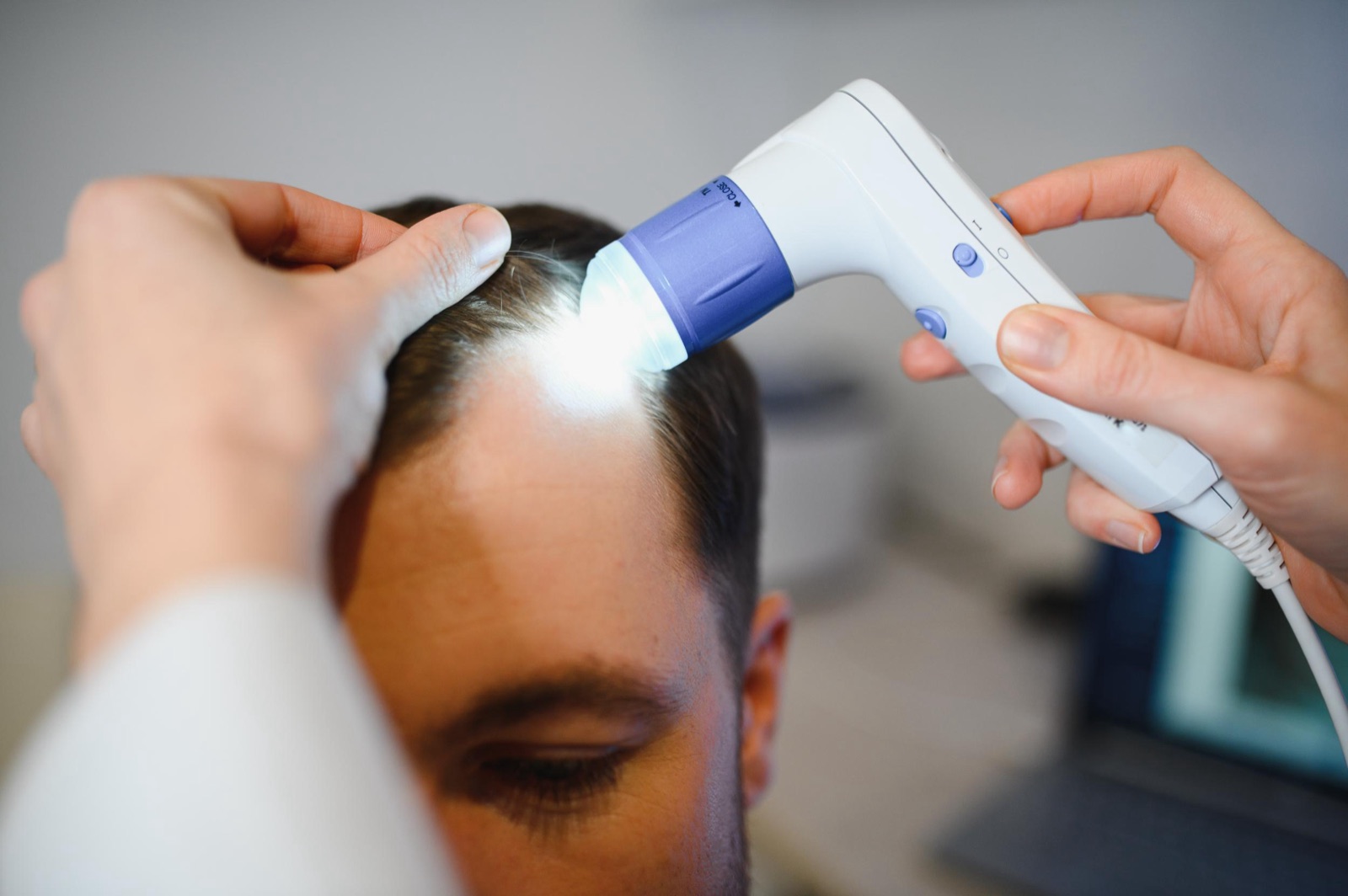
Not from a blog post, and not from a photograph. At the consultation a clinician examines the scalp under magnification, looks at the calibre variation between hairs in the same follicular unit, asks about family history, medications, recent illness and rate of change, and stages what is in front of them. Only then does a protocol get written.
Two people with identically thinning crowns can need materially different plans — one shedding acutely from a recent trigger, the other twelve years into a slow genetic pattern. Staging is what separates the two, and results vary by individual in every case.
You can see before-and-after photography from patients across all three treatments on our results page, filtered by protocol.
If you would like your own scalp staged before you commit to anything, book a consultation at our Toronto, Mississauga or Vaughan clinic and a clinician will walk you through what your hair is actually doing and what it is likely to respond to. Finance your plan with Beautifi — 6 months interest-free, instant approval.